Chapter 1: Before Shell Became A Fate
There was a time when Shell was not the organising fact of my life.
That sentence may sound obvious, but after all these years it needs saying plainly. Anyone discovering me through my websites, through leaked documents, through articles about Shell's critics, spies, scandals, or now through the curious modern theatre of AI bots arguing over my archive, might reasonably imagine that I was born mid-dispute. It can look as though I arrived in the world already carrying a bundle of papers and an instinctive mistrust of multinational oil companies. That is not so. I had a life before Shell became a campaign, and it was not a bad one.

My father and I had done well. We had lived in a succession of handsome houses. In Devon I owned a six-acre plot of land where my father and I obtained planning permission to build a 160-room motel. In Essex we had garage businesses. One of them held a Standard-Triumph and Chrysler new-car franchise. We sold the land. We sold the garages. In 1979, the year I sold the last garage business, I founded Don Marketing with my father, his brother, and a chartered accountant, Don Redhead.
That background mattered more than it may first appear. I had not wandered into promotions from nowhere. I knew the motor trade from the practical side, the customer side, the forecourt side. When later we created promotions for petrol companies, we were not guessing at the rhythms of that world from an office tower. We understood how ordinary motorists behaved because we had been around that trade in real life.
It was a good decision. More than that, it was an exciting one. We turned out to be a formidable team. We were imaginative, energetic, and rather better than many people first assumed. That last point matters. Britain has always had a way of underestimating creative commercial people unless they arrive with the right accent, the right school tie, or the right inherited address. We did not wait for anyone's blessing. We produced the goods.
What we produced were promotional games, but that phrase can make the work sound smaller than it was. Done badly, promotional games are forgettable gimmicks. Done properly, they alter markets. They create excitement, public attention, footfall, loyalty and talk. They can make an ordinary purchase feel like an event. We became extremely good at that. We made innovative games for packaged products such as Shredded Wheat. We worked for alcohol brands including Guinness. Our advertisements, with a confidence I still think was justified, described us as world leaders in promotional games.
That was not mere bluster. Our ideas travelled. They travelled because they worked and because people at the highest level could see they worked. NBC and CBS in the United States did not take an interest in us out of charity. NBC sent a team to London, led by senior vice-president Steve Sohmer, to inspect us before signing a contract for a unique promotional concept that had already obtained approval from the American authorities. I still have documents from that period. The contract was signed by me and by Ray Timothy, the president of NBC Television. It is one thing to think you have built something impressive. It is another thing to watch major American broadcasters conclude the same thing.
CBS was equally serious. James Rosenfield, president of the CBS Television Network, invited me to breakfast in his office. It was served by a uniformed butler, which is not the sort of detail one forgets. The invitation said something about the regard in which our ideas were held. So did the interest from other companies. When we approached Tesco with a proposal, the managing director met us at the Savoy Hotel in London to discuss it over lunch. Those are not the arrangements companies make for mediocrity.
There was, in those days, momentum in my life. Not just financial momentum, though that mattered. There was the feeling that one was moving forward in the world under one's own steam. Ideas led to meetings. Meetings led to contracts. Contracts led to more work, better work, larger ambitions. A successful business creates not only income but atmosphere. It changes what seems possible. It teaches you to think ahead. It allows you to picture a pleasant future with some confidence.
Then there was Shell.
I had known the name, of course, as everyone did. It belonged to that class of brands so large they seem less like companies than weather systems. To me it carried a little extra charm because I associated it with the Bing Crosby jingle. More importantly, it was one of the biggest brands in the world. To do business with Shell was to feel that you had entered the premier league. When Shell became our client, it was not just welcome business. It was validation.
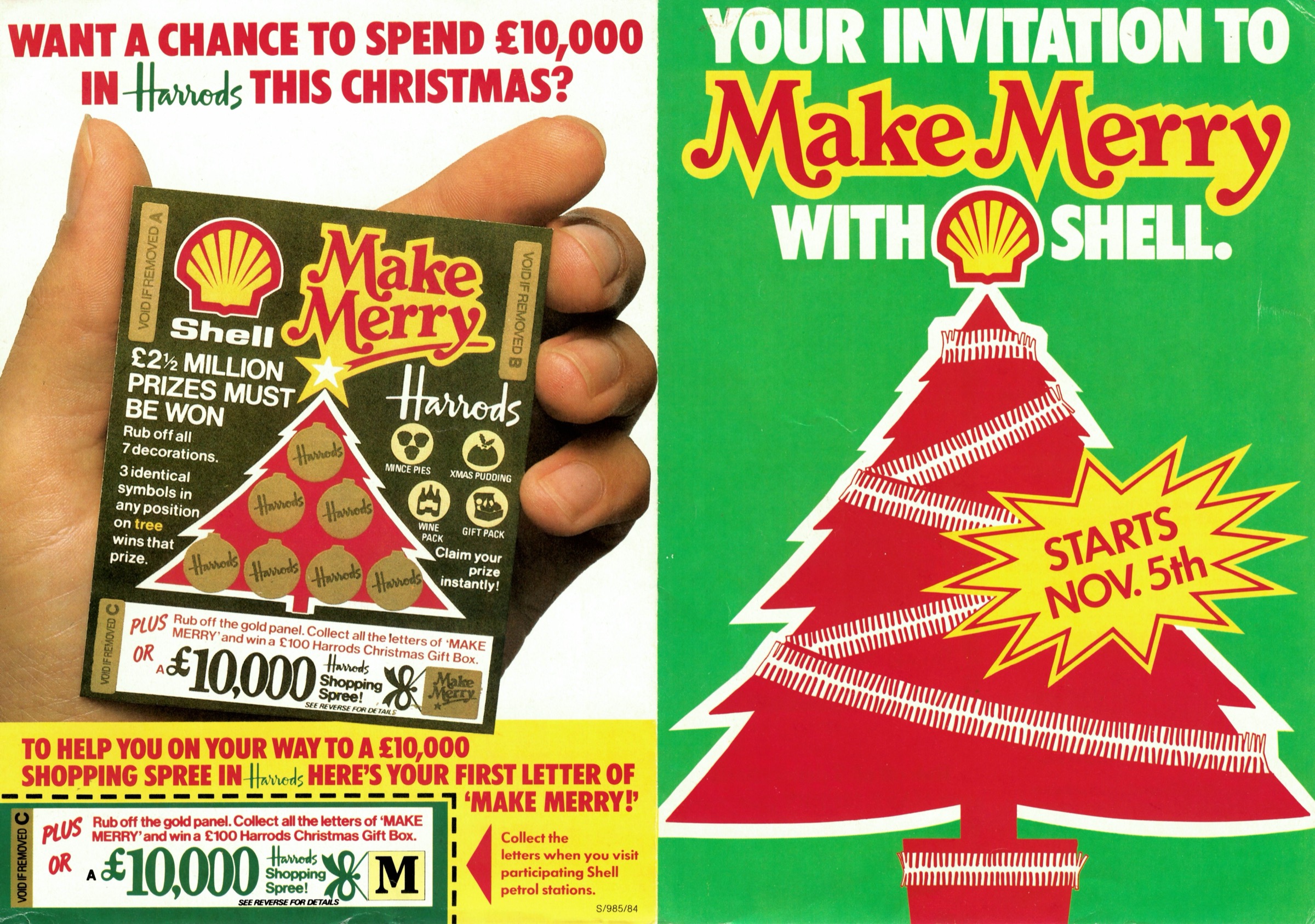
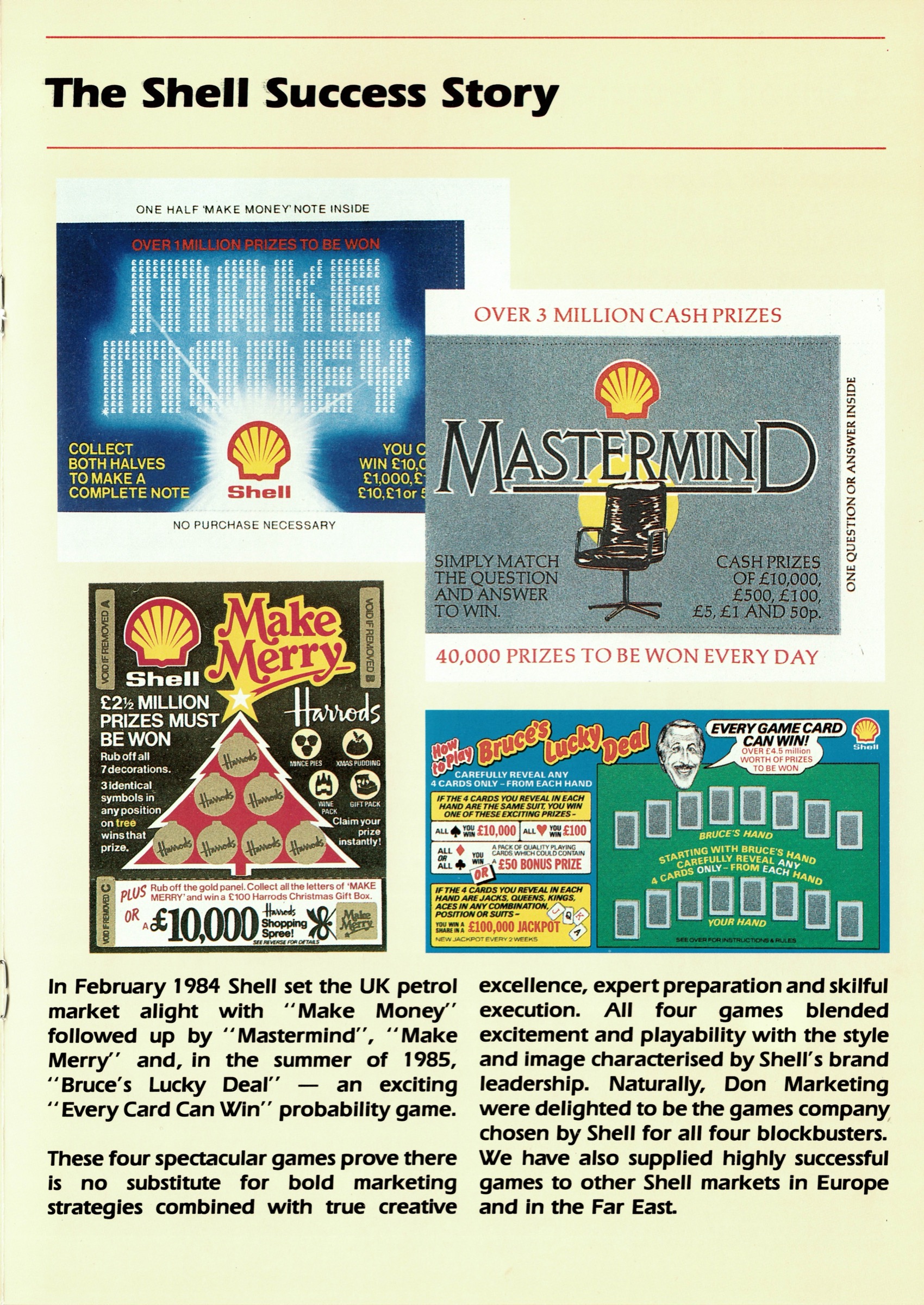
For roughly a decade, the relationship was excellent. Shell was our best client. Our games for Shell set the petrol market alight. Shell Make Money was the blockbuster, but it did not stand alone. There were other promotions too: Shell Mastermind, Shell Make Merry, Bruce's Lucky Deal, Star Trek The Game. They helped make the forecourt feel theatrical rather than routine. Shell Make Money in particular captured motorists' imaginations and attracted the attention of the news media. It also won us an award from the Institute of Sales Promotion. We did not simply print a few game cards and go home pleased with ourselves. We were acting as promotional consultants for Shell in many countries around the world. There was trust. There was mutual benefit. There was success substantial enough to make both sides feel clever.
That fact is central to everything that follows. The later conflict did not spring from a casual or trivial arrangement. It came after years of a wonderful, trusting, mutually successful relationship. That is why the sense of betrayal cut so deep. It is one thing to be treated badly by strangers. It is another to be undermined by people with whom you have already built something real.
My father retired to Florida in 1985 to live with my mother, but the business continued in good shape. We had every reason to think the future would be larger than the past. We were proven. We had range. We had ideas that travelled internationally. We had the kind of reputation that opened doors in London and New York alike. If someone had asked me then how the rest of my life might unfold, I would not have predicted old age spent preserving evidence against a multinational giant. I would have expected more success, more deals, more invention, more comfort, more holidays, and, most likely, more houses rather than fewer.
That is what makes the next part so violent, even though at first it did not look violent at all. Catastrophe in commercial life does not always arrive with sirens. Often it arrives disguised as an ordinary personnel change or a routine meeting. In our case, the atmosphere changed when Shell appointed a new national promotions manager, whom I will call AJL.
At the time, I did not know what I would later come to believe about his relationship with Option One, or about the way Shell contracts could move in directions that made little commercial sense unless something improper was going on. At the time, I only knew that the settled confidence of a productive business relationship had begun to wobble. You rarely recognise the decisive turning point when it first appears. It announces itself modestly and only later reveals that it has taken your future with it.
The moment I truly remember came not in a courtroom or at a negotiating table but one morning with a newspaper in my hands. I opened it and saw an advertisement for a Shell promotion based on a Nintendo Game Boy theme. I was shocked. I telephoned AJL immediately because the promotion struck me as based on an idea I had presented to him in the strictest confidence. During that same conversation, he said something that chilled me in a different way: Shell could run Make Money without us.
That sentence did not yet contain the whole disaster, but it contained the outline of it. Soon enough I would discover that a Make Money game was being printed in North Wales. Soon enough the relationship that had once brought us pride and prosperity would give way to accusations, claims, counterclaims, legal actions, libel actions, settlements, letters, pressure, expense, and a great deal more besides. Soon enough Shell would cease to be my best client and become my defining adversary.
But that comes later.
For now I want to hold on a little longer to the world before the break. The world of ideas. The world in which my father and I were not engaged in a grinding war with power but in the far more pleasurable business of making things happen. The world in which the future seemed open. The world in which Shell, of all companies, looked less like a threat than a triumph.
That is the life I mean when I say I was cheated out of a nice one.